|
I was looking for the following out-of-print books:
|
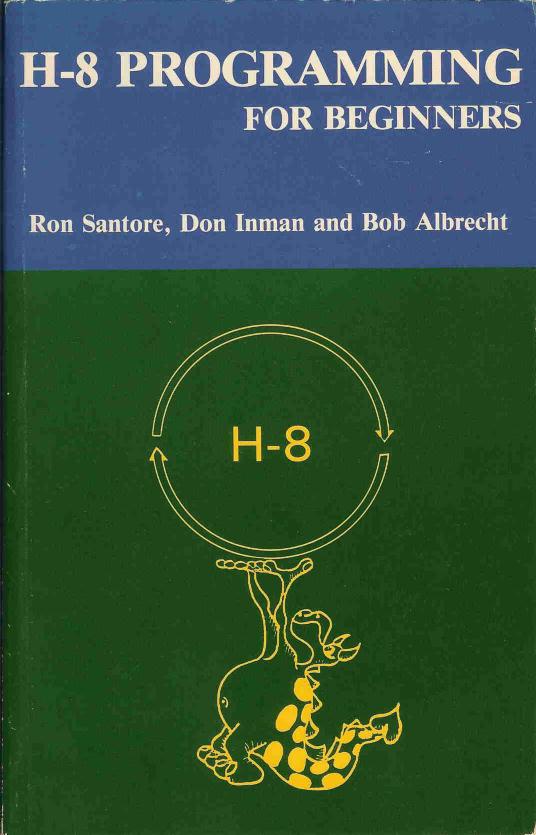
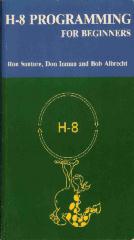
H-8 Programming for Beginners, Ron Santore, Don Inman and Bob Albrecht
|
 I'm always on the lookout for old computers to
rescue, including those made by Heathkit.
One early model is the
H-8,
an Intel 8080-based desktop computer introduced in 1977.
Besides the hardware and software, I'm also interested in documentation
and reference material for these old machines.
I'm always on the lookout for old computers to
rescue, including those made by Heathkit.
One early model is the
H-8,
an Intel 8080-based desktop computer introduced in 1977.
Besides the hardware and software, I'm also interested in documentation
and reference material for these old machines.
Dilithium Press published this title in 1980. From the back cover:
This book is a short programming course that will lead you step by step
into the basics of computer programming. Specifically designed for use
with the Heath H-8 computer, it not only covers assembly language
programming but also Benton Harbor BASIC. As you go along, everything
is defined for you, and in each chapter you write a program or subroutine.
In this way you are introduced to only a few new programming instructions
at a time. This is a book of basics, not techniques, so you will not
need a background in computers, electronics, or programming.
|
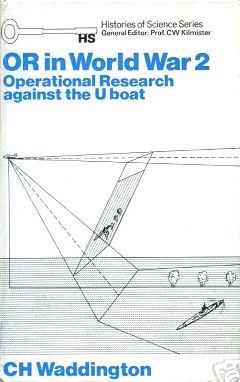
OR in World War 2: Operational Research Against the U-Boat, C. H. Waddington, 1973, ISBN 023615463X
|
 I finally received a copy of this title in December 2006. I first ran across a
reference to it in The Pleasures of Counting.
I finally received a copy of this title in December 2006. I first ran across a
reference to it in The Pleasures of Counting.
From the Preface:
Operational Research has by now become an important factor in management,
not only in military contexts but for industry. With its wider acceptance
has come, inevitably, greater specialisation; most publications about
operational research are devoted to the study of some rather particular
detailed problem. The general character of a discipline, which is what
students need to learn, is perhaps better exemplified in its first phases
of development, when its principles are first being worked out, and there
is not too much detail or backlog of professional infighting to obscure
the main outlines.
|
Elements of Networking Style, Mike Padlipsky
|
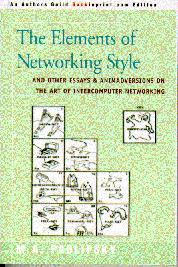 I received an e-mail in July, 2000, informing me that
iUniverse.com
had just come out with a "backprint" of the title. I ordered it
on the web and it arrived about two weeks later.
I received an e-mail in July, 2000, informing me that
iUniverse.com
had just come out with a "backprint" of the title. I ordered it
on the web and it arrived about two weeks later.
As an aside, Mike's writing style is, shall we say, unusual.
His ideas have merit, but it takes some work to filter
through the commentary and get to the nuggets.
|
|
Mad Scientists' Club, Bertrand Brinley
|
|
I moved theinformation regarding the Mad Scientists' Club to a separate page, which you can see by clicking
here.
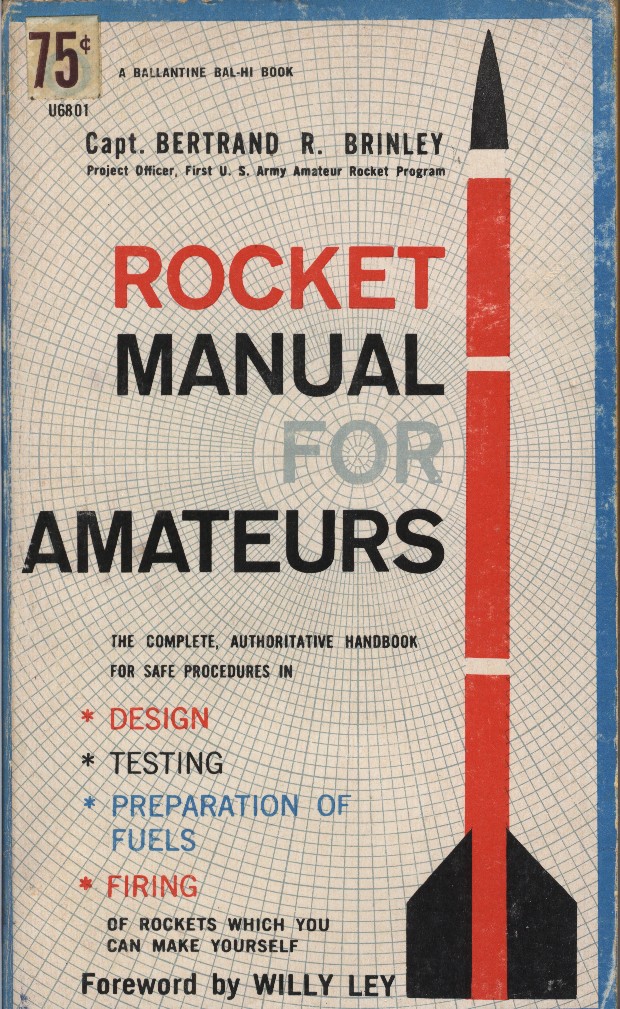
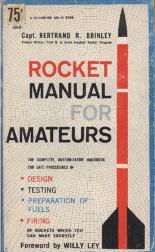 Brinley also wrote a non-fiction book in 1960 called Rocket Manual for Amateurs. I found a copy in a used book store.
(Click here for more information on a radio-based model rocket locator.)
|
|
Inside the TRS-80 Model 100 by Carl Oppedahl
|
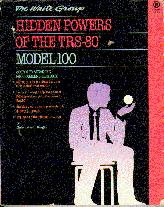 I received my first TRS-80 Model 100 as a gift in 1983, and
it's been a favorite ever since. Other laptops surpass it in
many respects, of course, but it is rugged, has a real keyboard,
boots up instantly and is easily programmed in BASIC. I even
used it once to brute force a password on an HP-2000F system via the
built-in modem!
I received my first TRS-80 Model 100 as a gift in 1983, and
it's been a favorite ever since. Other laptops surpass it in
many respects, of course, but it is rugged, has a real keyboard,
boots up instantly and is easily programmed in BASIC. I even
used it once to brute force a password on an HP-2000F system via the
built-in modem!
I'm interested in these
"classic"
computers and
was was looking for a book by Carl Oppedahl entitled
Inside the TRS-80 Model 100. It finally found a copy via
websearch at Title Wave Books, a used book store in New Mexico.
It showed up a few days after ordering.
The Model 100 is not Year 2000 compliant -- the date that appears
on the main menu is hardcoded to show a century value of "19". There
is a software patch to correct this problem, which can be found
here.
I am looking for parts and accessories for the Model 100, which you
can see listed here.
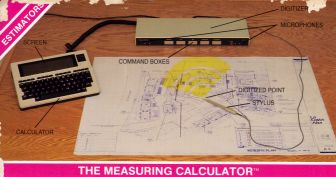
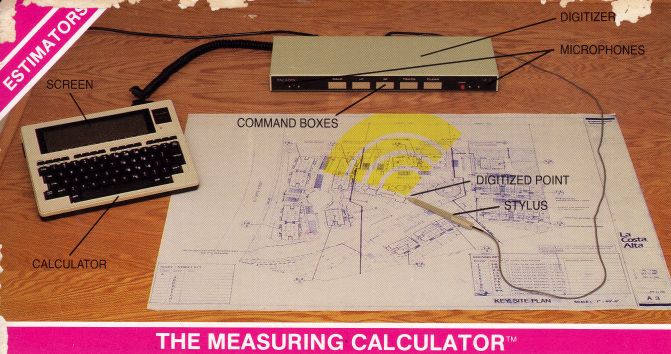
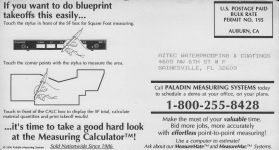 The Model 100 (and follow-on Model 102) were occasionally used as part
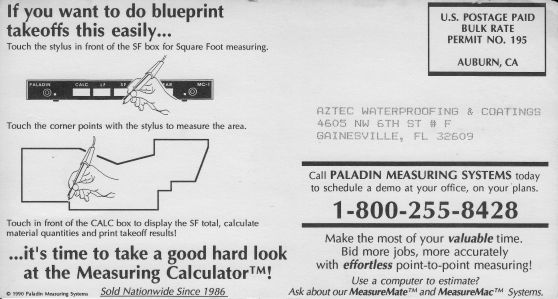
of a larger system or product. One such product was the Paladin Measuring
Systems "Measuring Calculator".
The Model 100 (and follow-on Model 102) were occasionally used as part
of a larger system or product. One such product was the Paladin Measuring
Systems "Measuring Calculator".
|
|
|
Calculator User Guide and Directory, Charles Sippl
|
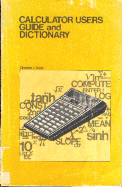 I'm interested in
old calculators, primarily from the 1960s and 1970s, so the
Calculator User Guide and Directory by Charles Sippl
has proven to be a useful reference. It covers essentially every
commercially available handheld and desktop calculator available
during the early to mid-1970s.
I'm interested in
old calculators, primarily from the 1960s and 1970s, so the
Calculator User Guide and Directory by Charles Sippl
has proven to be a useful reference. It covers essentially every
commercially available handheld and desktop calculator available
during the early to mid-1970s.
|
|
Cheating at Cards, Bryan Clough
|
|
Cheating at Cards by Bryan Clough discusses various
weaknesses in credit card systems.
Jeff Moss recommended it
a while back, and I eventually ordered in from Amazon UK.
It took nearly five months to arrive here in Maryland.
|
|
Programmer's Guide to the 1802, by Tom Swan
|
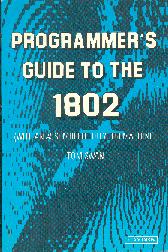 Back in the late 1970's there were a series of single-board
computers that were built around the RCA 1802 microprocessor.
At the time I was never fortunate enough to own one of those
Elf or SuperElf machines, and so never had the opportunity to
program the 1802.
Back in the late 1970's there were a series of single-board
computers that were built around the RCA 1802 microprocessor.
At the time I was never fortunate enough to own one of those
Elf or SuperElf machines, and so never had the opportunity to
program the 1802.
A few years ago I was doing some reverse engineering on some
cellular telephone firmware that ran on an 1806, a later
version of the classic 1802. I located an old RCA databook
with the mneumonics and wrote a disassembler, but the
online references at the time suggested a book by Tom Swan
entitled Programmer's Guide to the 1802. I eventually
located the title via an on-line bookseller.
Besides a clear explanation of the 1802 itself, the book
also provides code for an 1802 assembler.
Now I just need to find someone who is getting rid of their
Elf or other 1802 single-board computer and I'll be able to
do what I couldn't do 30 years ago.
For more information about the RCA 1802 microprocessor,
click here.
|
|
U.S. Navy Bureau of Ordnance in World War II, Department of the Navy
|
|
A 500+ page book that details the history of the Bureau during
World War II, including the persistent torpedo problems that
plagued submariners during the early part of the war.
|
|
ZAP! The Rise and Fall of Atari, Scott Cohen
|
|
Like many game players in the 1970's, I put a lot of quarters into arcade
games - including many made by Atari. Later I bought an Atari 2600 game machine
with many of the "classic" game cartridges.
This book chronicles the history of Atari and its founder, Nolan Bushnell.
You can read a review of the book here.
|
|
Radionavigation Systems, Boerje Forssell
|
|
Excellent descriptions of various radio-based methods of location
and navigation. Originally recommended by Phil Karn.
|
|
Paperbytes Bar Code Loader, Ken Budnick
|
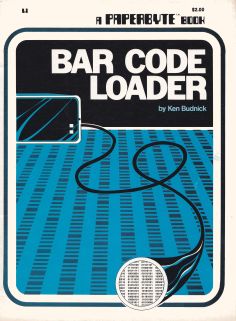 A method for microcomputer program entry from 1977.
One of the most common problems for users and suppliers of personal
computer software is the need for product distribution in a form which
is helpful to the user, low in cost, tolerant of errors in production
use, and free of the need for expensive highly specialized peripherals.
One solution, conceived in detail by Walter Banks of the Computer
Communications Network Group at the University of Waterloo, Ontario,
Canada, is the use of bar code patterns prepared on a computer-controlled
typesetter. A bar code is a linear array of printed bars or varying width
which encodes digital data as alternating patterns of black ink and white
paper. By using a ruler as a guide, an inexpensive handheld "wand"
scanning unit converts the bar patterns into a time-varying logic level
signal. This time-varying binary value can then be interpreted by a program
which understands the format of the bars.
The purpose of this pamphlet is to present the decoding algorithm which was
designed by Ken Budnick of Micro-Scan Associates at the request of BYTE
Publications Inc. The text of this pamphlet was written by Ken, and contains
the general algorithm description in flow chart form plus detailed assemblies
of program code for 6800, 6502 and 8080 processors. Individuals with
computers based on these processors can use the software directly.
Individuals with other processors can use the provided functional
specifications and detail examples to create equivalent programs.
|
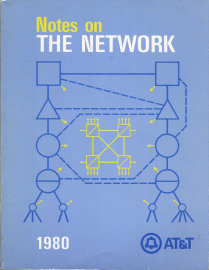 This document is mostly of historical value, being the reference
document for the long distance telephone network prior to the court-ordered
break-up of the phone company ("Ma Bell") in 1982.
This document is mostly of historical value, being the reference
document for the long distance telephone network prior to the court-ordered
break-up of the phone company ("Ma Bell") in 1982.
An electronic copy of this book, along with a number of other historical
documents related to the telephone system, can be found
here.
|
|
Flying Your Bell Model 206 JetRanger
|
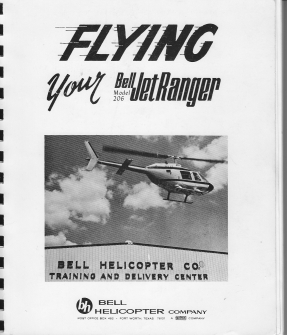 A companion to the Pilot's Operating Handbook (POH), this publication
provides an overview of piloting the iconic single-engine turbine
helicopter.
A companion to the Pilot's Operating Handbook (POH), this publication
provides an overview of piloting the iconic single-engine turbine
helicopter.
|
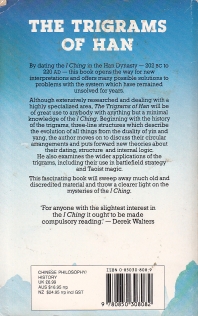
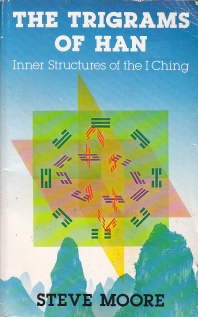 A discussion of the history and organizational structure of the
I Ching, an ancient Chinese wisdom tome.
A discussion of the history and organizational structure of the
I Ching, an ancient Chinese wisdom tome.
|
|
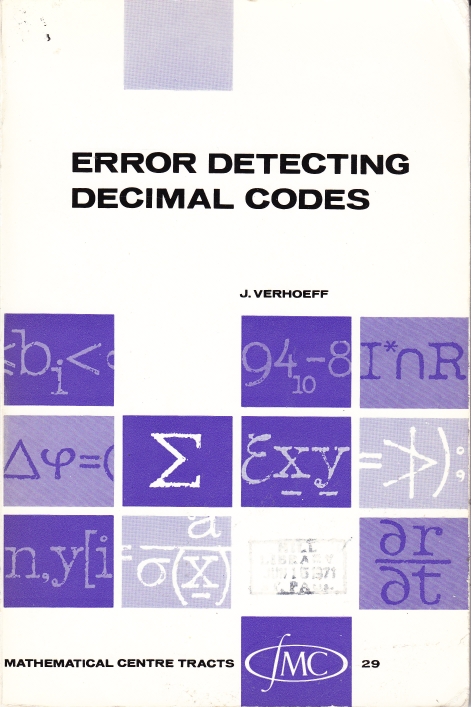
Error Detecting Decimal Codes
|
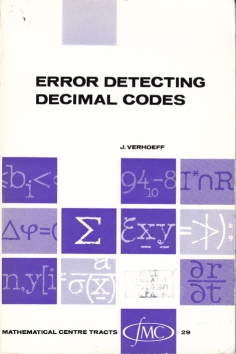 Mathematical methods for detecting errors in transmitted information.
|
|
The Digital Electronic Watch
|
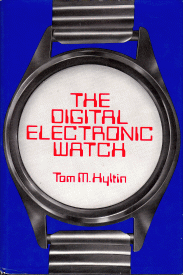 A 1978 book describing LED and LCD wristwatch technology. It includes
a long appendix describing battery replacement and setting instructions
for a large number of different watches.
A 1978 book describing LED and LCD wristwatch technology. It includes
a long appendix describing battery replacement and setting instructions
for a large number of different watches.
|
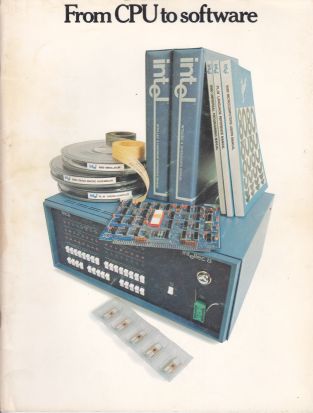 A 1974 publication from Intel introducing the 8080 microprocessor:
The 8080 Microcomputer is here! It is the first high-performance, n-channel,
single chip microprocessor available with a performance matched circuit family
and software backup. It is also the only microcomputer available that is supported
by over a 100-man-years of microcomputer, systems, software and engineering
experience.
The 8080 would go on to be used in the first generation of hobby computers, many
of which I am interested in rescuing.
|
|
Received the June 1971 issue of Model Rocket News, which
contains an announcement of the
TRANSROC model rocket transmitter from the 1970s.
|
|
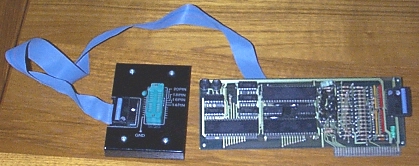 I was looking for documentation and software for this card and
integrated circuit holder combination that appears to fit in
an old Apple 2 computer.
I was looking for documentation and software for this card and
integrated circuit holder combination that appears to fit in
an old Apple 2 computer.
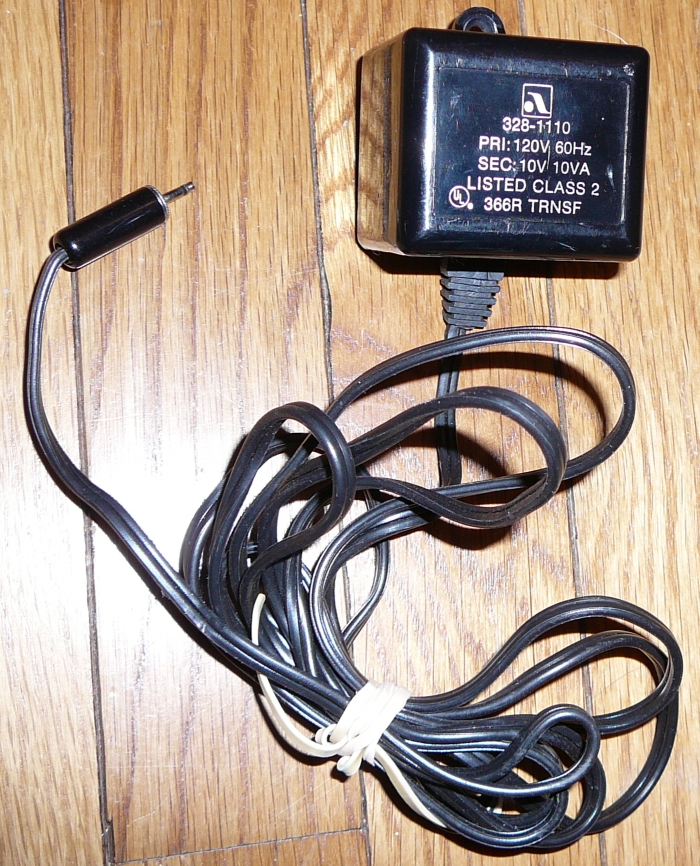
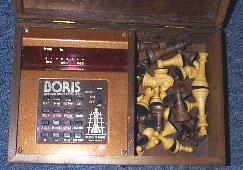 I have a Boris Electronic Chess Computer without an AC adapter,
so I was looking for the proper power supply to go with it.
I have a Boris Electronic Chess Computer without an AC adapter,
so I was looking for the proper power supply to go with it.
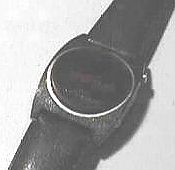 I found an old Texas Instruments (TI) watch, a TI-500.
This is a mid-1970's era wristwatch that displayed the time using
four red LED's when a button was pushed. It was the first digital
watch I owned (I received it as a gift).
I found an old Texas Instruments (TI) watch, a TI-500.
This is a mid-1970's era wristwatch that displayed the time using
four red LED's when a button was pushed. It was the first digital
watch I owned (I received it as a gift).
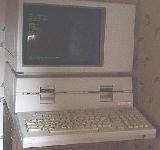 I now have two Hewlett-Packard 9836C desktop computers that boot up and wait
for an operating system.
I now have two Hewlett-Packard 9836C desktop computers that boot up and wait
for an operating system.
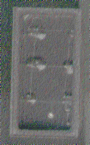
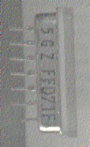 The display measures 7/8-inch high by 7/16-inch wide and contains
seven incandescent segments. The display itself is not a tube, as
a normal numitron would have.
This has a flat glass front and square sides, shaped
much like an integrated circuit package.
The display measures 7/8-inch high by 7/16-inch wide and contains
seven incandescent segments. The display itself is not a tube, as
a normal numitron would have.
This has a flat glass front and square sides, shaped
much like an integrated circuit package.
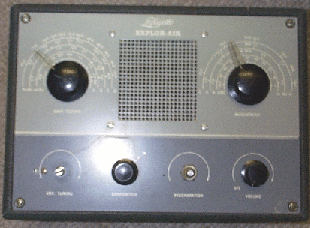 I have a Lafayette Explor-Air super regeneration receiver that was
missing two of the small knobs from the front when I acquired it.
I have a Lafayette Explor-Air super regeneration receiver that was
missing two of the small knobs from the front when I acquired it.
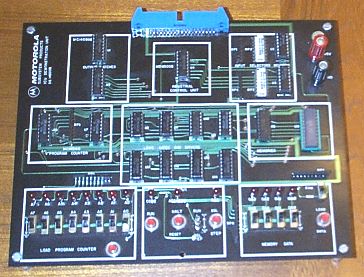
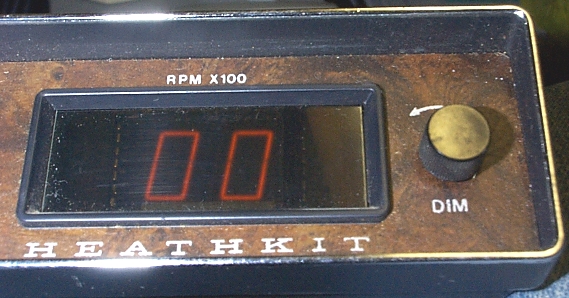
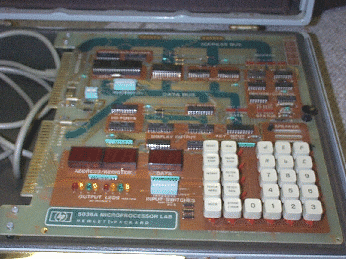 I have a Hewlett-Packard 5036A Microprocessor Lab in a Samsonite briefcase
that appears to work but I don't have any documentation for it.
I have a Hewlett-Packard 5036A Microprocessor Lab in a Samsonite briefcase
that appears to work but I don't have any documentation for it.
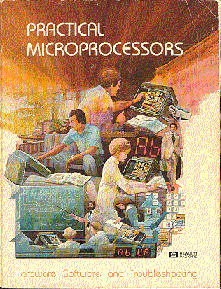 I purchased a second HP 5036A and it came with a 450+ page
manual entitled Practical Microprocessors, HP part
number 05036-90003. I purchased a second copy from a used
bookstore, so now each Lab has an accompanying manual.
I purchased a second HP 5036A and it came with a 450+ page
manual entitled Practical Microprocessors, HP part
number 05036-90003. I purchased a second copy from a used
bookstore, so now each Lab has an accompanying manual.
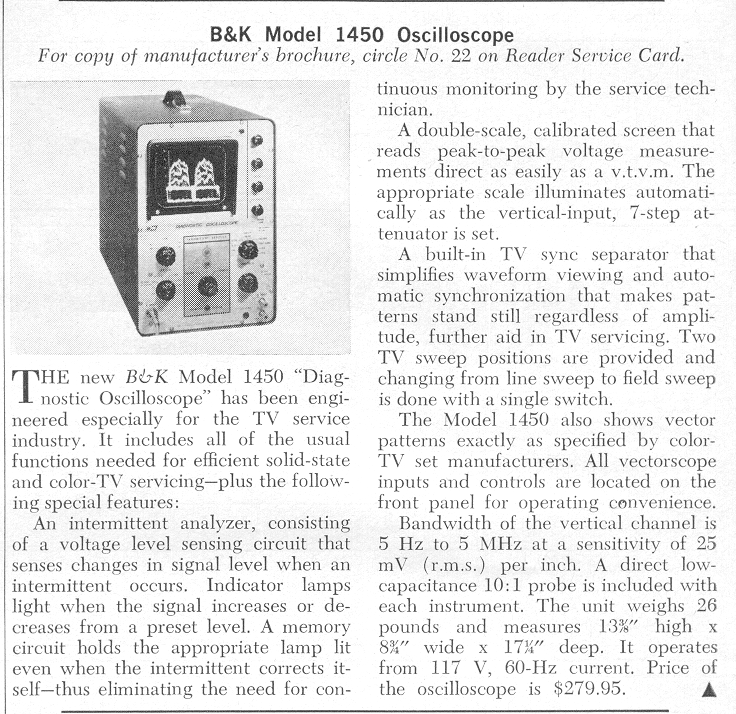
 I have an old B&K model 1450 Diagnostic Oscilloscope but
I don't have a manual for it.
I have an old B&K model 1450 Diagnostic Oscilloscope but
I don't have a manual for it.